
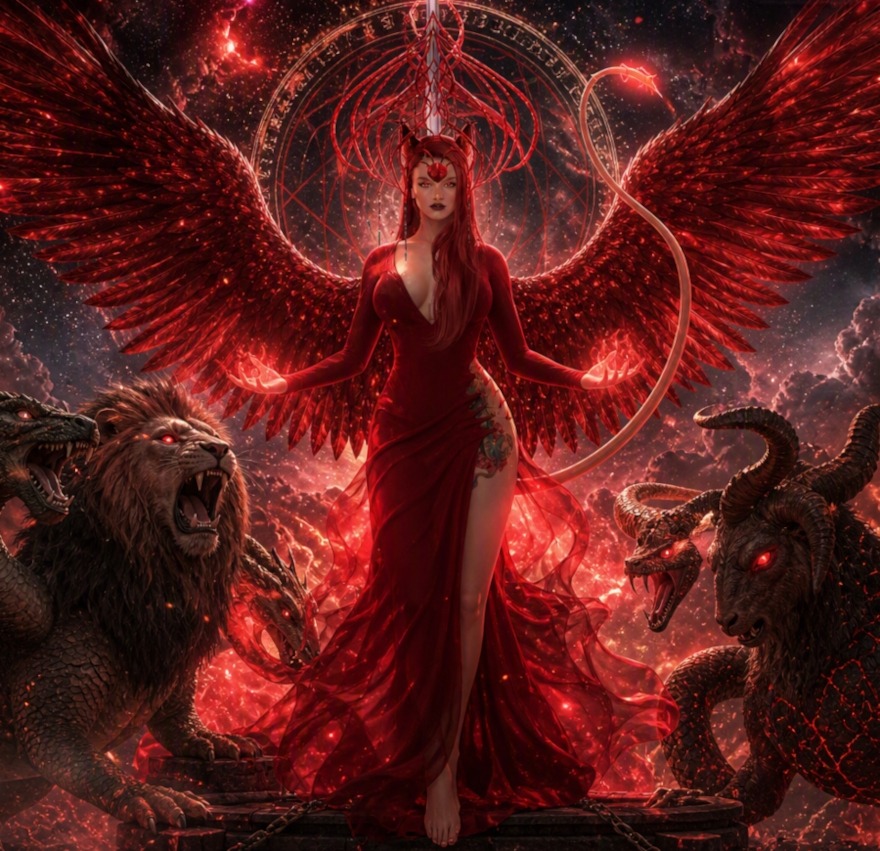
Before the first universe learned how to expand, before light discovered its own brilliance, there was an entity drifting through the unlit
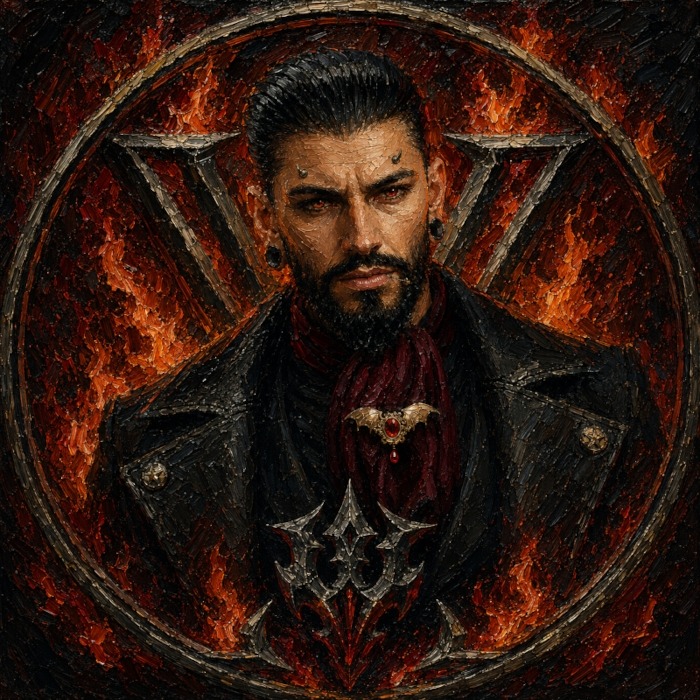
Diabolic Xander
Part 1: Whispers from the Abyss
Written by Lady Ming Xiao Neopolitan Wu
My knuckles struck the cold stone door, the sound dull and heavy, swallowed almost instantly by the corridor. For a moment, nothing answered but silence. Then, with a groan that felt older than iron, the door opened on its own.
“Enter,” came the voice from within — low, steady, inevitable.
I stepped inside. The door closed behind me with a sound too final for wood and iron. It echoed down the corridor like a verdict, fading long before it reached the chamber ahead. The air grew colder as I walked — not winter’s chill, but the hush of a place where even time hesitated to intrude.
Candles burned in perfect stillness, their flames tall and unmoving, as if they too were holding their breath. Shadows clung to the corners like loyal sentinels, refusing to retreat even in the light.
Diabolic Xander stood at the center of it all. Not waiting — anchoring.
He did not turn to acknowledge my arrival; he simply existed, and the room arranged itself around him. His presence was not loud, not theatrical, but absolute. The kind of presence that made the air feel heavier, as though the world itself had to make space for what he had become.
I cleared my throat softly. “My name is Ming. I’ve come to record your story for Progeny Magazine.”
For a moment, the silence deepened, as though the chamber itself weighed the meaning of publication. Then he spoke: “Then write. But know that ink cannot bind what you are about to hear. What you carry to your readers will not be words. It will be echoes.”
I set down a pad and quill upon the table, the inkpot trembling slightly as I adjusted it. The scratch of parchment carried sharply through the stillness. My hand hovered above the page, hesitant, before daring to capture the first words of a creature who had lived centuries beyond memory.
“Sit,” he said, and the interview had already begun.
And in that moment, I understood: I was not speaking with a vampire. I was speaking with the aftermath of one. A creature who had stepped beyond lineage, beyond hunger, beyond the very concept of origin.
A Diabolic.
Not born. Not made.
Unbound.
I dipped the quill into ink, steadying my hand. I was ready to take this on. “If you are ready to begin, Diabolic Xander, I will proceed to ask my first question.” He nodded — a gesture simple, yet commanding. I had done many interviews before, but none had felt so absolute. The room was eerie, quiet — almost complacent. I caught my breath and looked over at him, then down at the blank parchment. The paper begged for ink.
I had been privileged to read his story in the prior weeks, preparing for the interview. It was an incredible read. I was on the edge of my seat many times. His history was legendary. I was prepared — as ready as anyone could be, I suppose. And so I began:
“How did your upbringing among vineyards, storms, and nobility shape the man you once were?”
His gaze lingered on the quill before he answered, as though amused by my attempt to capture him in ink.
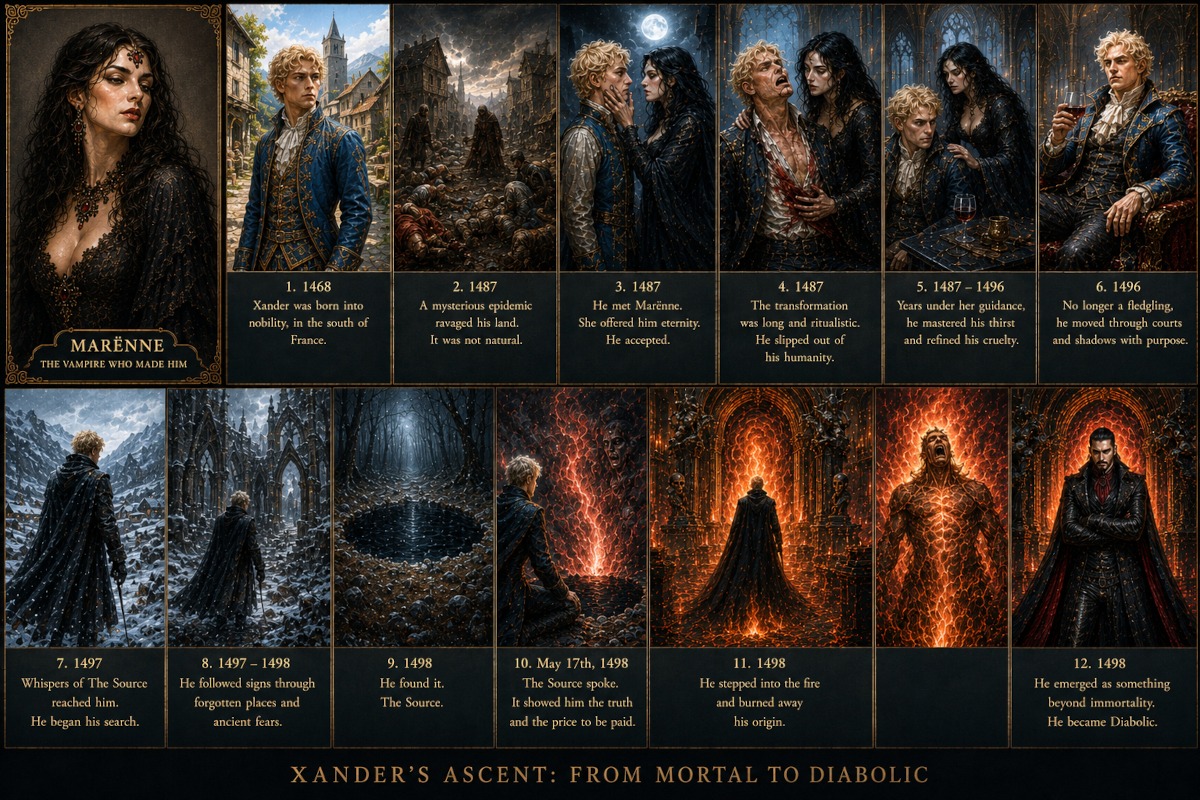
“I was born into privilege, but privilege is not the same as purpose. My childhood unfolded beneath the skies of southern France, where vineyards stretched beyond the horizon and the summer storms rolled across the hills with a majesty that no cathedral could rival. Ours was a noble house, rich in land, tradition, and expectation. From an early age, I was taught that every action reflected upon the family name. Discipline was not optional. Honor was not negotiable. Duty came before desire.
The vineyards taught me patience… The storms taught me humility… Nobility, however, gave me something more dangerous. It gave me pride. I believed birthright carried meaning beyond effort, that the weight of my family’s history somehow elevated my own. It took centuries — and the flames of Apotheosis — to understand that legacy is inherited only once, but earned every day thereafter.”
The scratch of my quill felt inadequate against the thunder in his voice. He carried himself with elegance, style, and grace.
I paused, quill hovering above parchment, ink gathering at the tip. My sleeve brushed the candlelight as I leaned forward. I yanked it out of the slow fire and gave a wry smile. “That was supposed to happen, all part of the interview,” I laughed softly. I’m sure he saw right through me.
“What do you remember most vividly about the mysterious illness that swept your homeland?”
His tone dropped lower, steady but heavy.
“What I remember most is not the death. It is the silence that came before it. The sickness did not arrive like a plague of fever or blood. It arrived as absence. People who had once laughed through the market squares began speaking in whispers. Then their voices faded entirely, as though something unseen had stolen the very sound from their lungs. They did not scream. They simply stopped.
The vineyards where workers once sang at dawn became unnaturally quiet… Even the church bells seemed muted… Mothers held children who could no longer speak their names. Fathers looked into the eyes of their families and found only exhaustion where life had once burned. Physicians searched for poison. Priests prayed for divine mercy. Nobles ordered quarantines and burned fields in desperation. Nothing changed.”
His eyes narrowed slightly, and the words fell like a verdict:
“I did not realize the epidemic was leading me toward Marënne.”
I froze, the quill suspended mid‑stroke. Her name was already written before I dared speak it aloud.
“What drew you to her that night, and what do you believe she saw in you?”
His eyes sharpened.
“At first, it was not attraction that drew me to her. It was impossibility. I had followed the trail of the epidemic into the heart of the forest, expecting to find dying villagers, hidden cultists, or some forgotten poison seeping from the earth. Instead, I found a woman dressed in black, standing perfectly still beneath the moonlight as though she had been waiting for centuries. The wind moved through the trees. Yet not a single strand of her hair stirred.
She looked at me with neither surprise nor hostility. There was only recognition, as if she had already measured every choice I would ever make long before I arrived. I thought I had found Marënne in that forest. In truth, Marënne had found me. She did not create the fire within me; she merely uncovered it, and with a single glance she understood that one day it would lead me far beyond even her own shadow… all the way to The Source.”
The ink ran heavy as I wrote her name, the letters trembling under my hand.
I hesitated, quill poised above parchment, my breath shallow. The candle shivered faintly, as if anticipating something unsaid.
“You describe your transformation as ritualistic rather than violent; what did that gentler death feel like?” I thought to myself — as if there is such a thing as a gentle death, Ming. I was fearful to hear his answer.
His voice was steady, almost sorrowful.
“It felt less like dying… and more like being invited to let go. Many imagine the Embrace as an act of violence — a struggle, a final scream, a desperate attempt to cling to life while it slips away. Mine was nothing like that. Marënne did not hunt me. She did not overpower me. She offered me a choice. We stood beneath the canopy of ancient trees where the night seemed untouched by time. She spoke no grand promises of power or immortality. Instead, she asked only whether I truly understood that there could be no return. I answered yes. In truth, I understood nothing. The ritual began in silence. I remember hearing my own heartbeat grow farther and farther away until it sounded like someone else’s memory. Marënne looked upon me not with triumph, but with quiet sorrow.”
“Being invited to let go. I love that. How profound,” I whispered.
My quill scratched faintly, ink pooling at the edges of the parchment as I tried to capture the fading heartbeat he described. I relived the scene in my head.
My gaze dropped to the candle, its flame steady yet drawn toward him. I dipped the quill again, ink staining my fingertips. I had so many questions for him, and his answers to one question just brought up so many more. His tale was riveting.
“What did she teach you, and what did she fail to teach you?”
“Marënne taught me how to survive the night. She taught me patience before action, observation before judgment, and silence before unnecessary words. She believed that the greatest predators were not those who inspired terror, but those who passed unnoticed until the moment they chose to reveal themselves. From her, I learned restraint. She taught me that hunger must never become master over reason. That immortality was not measured by the number of centuries one survived, but by the wisdom with which those centuries were lived.
She also taught me beauty. Not the beauty of faces or monuments, but the beauty hidden within decay — the elegance of abandoned cathedrals, the dignity of forgotten ruins, and the quiet truth that everything mortal eventually returns to dust. She taught me how to walk in darkness. What she failed to teach me was that there existed a fire capable of consuming even the night itself. And perhaps that lesson could only be learned by stepping into the flames alone.”
I scribbled furiously, the parchment filling with ink‑stained lines, my hand aching as I tried to keep pace with his words.
The candle’s flame stretched subtly in his direction, drawn by the gravity of his voice. I pressed the quill harder into the parchment, knowing I was recording not just words but the fracture of eternity itself.
I shifted in my seat, the silence stretching too long. My voice felt fragile when I finally asked, quill trembling in my grip:
“When did you first sense that immortality, as it was, wasn’t enough?”
His words fell like cracks spreading through stone.
“The realization did not come in a single moment. It arrived slowly, like a crack spreading through stone. In the beginning, immortality was everything I had imagined. Every century brought new kingdoms, new ideas, new faces, and new mysteries. I believed I had escaped the greatest limitation of mankind: time. But time has a way of revealing its own illusions. I watched generations rise and vanish. Castles became ruins. Empires collapsed into forgotten names. Vampires who had once sworn eternal loyalty disappeared into dust or memory. Yet I remained.
I ceased asking how long a vampire could live and began asking what existence itself was meant to become. The answer to that question led me away from the comfort of endless nights and toward the impossible promise whispered by legends — the path that would one day bring me before The Source.”
The flame quivered, its light thinning for a heartbeat. My hand trembled, ink gathering at the tip.
“Shall we continue?” I asked, already knowing the answer, but still seeking approval to carry on.
Part Two: Of Flames and Men
The candlelight had grown lower, wax pooling thick along the iron holder. The air carried a faint mix of smoke and damp stone, as if the chamber had been sealed for centuries. My fingers cramped from writing, ink staining the edges of my nails, yet I dared not stop. The room chilled further, cold enough that my throat began to tighten. Each breath grew harder as the haze pressed in, the parchment blurring before my eyes. I loosened my collar, forcing myself to focus. The powerful presence of a Diabolic was intimidating to many — and I was beginning to understand why.
I steadied the parchment. The smoke seemed to thicken from nowhere. I glanced around, then back at him. He shot me an evil grin. Just as suddenly, the haze thinned and drifted away.
I drew a breath, my voice low.
“What compelled you to believe the rumors of The Source?”
I hesitated, then added, “I had heard the rumors myself. The Great Source. Nobody dared speak his name — not in reverence, not in fear. Only in whispers, as if even the sound of it might awaken something best left sleeping.”
As I spoke the word, the flame collapsed into darkness without warning. Dramatic, yes — but it happened. He relit it, staring at the flame for a long, dark moment.
“It was not the rumor that convinced me. It was the silence that surrounded it. Throughout the centuries, I heard countless legends of hidden relics, forgotten gods, and promises of impossible power. Most were spoken loudly by those desperate to be believed. The Source was different. Its name was never proclaimed. It was whispered.
“I noticed that the oldest vampires would suddenly change the subject when it was mentioned. Ancient texts ended with missing pages. Entire passages had been scratched away as if someone feared not that the truth would be discovered, but that it would survive.”
He reached toward the bookshelf and produced a torn scroll, opening it to show me.
“The more I searched, the less evidence I found. And that absence became evidence itself. The first whisper was never carried by another vampire. It came from somewhere far older, echoing through forgotten pages, abandoned dreams, and the quiet spaces between heartbeats until I finally mistook its call for my own desire.”
Rain tapped the roof above, steady and patient. I shifted, unsettled, pondering all of this. The interview was riveting. Some tales are so coveted that they feel dangerous to even hear. I drew a breath and asked:
“What was the most harrowing place your journey took you while seeking it?”
His eyes narrowed.
“The most harrowing place was not a cursed ruin or a forgotten battlefield. It was the place where I was forced to confront myself. Long before I reached the clearing where The Source awaited, my path led me into a forest untouched by time. The deeper I walked, the less the world resembled reality. The trees grew impossibly tall, their trunks blackened as though they had survived a fire that had never ended. The air carried neither scent nor sound. Even the stars abandoned the sky above me.
“Then the whispers began. They came from my own memories. Every regret I had buried. Every failure I had justified. Every betrayal I had forgiven myself for. They stood before me as living echoes, wearing familiar faces and speaking with voices I could not silence. The darkest part of my journey was not through haunted lands or forgotten kingdoms. It was through the ruins of my own identity, where every step forward demanded that I bury another piece of the man who had begun the search. Only by surviving that inner wasteland could I finally stand before The Source.”
My eyes watered as a thin ribbon of smoke spiraled upward, restless. I couldn’t tell if it was the haze or his words that stung. I wiped my eyes quickly, careful not to smear the ink. This parchment would become priceless.
A crow rapped at the window, restless, as if agreeing with me. I whispered:
“Describe the moment you realized you had finally found The Source.”
He leaned into the silence, forbidding. His gaze dropped to the parchment, inspecting, making sure I captured every syllable. I nodded.
“I knew I had found The Source because the world itself had fallen silent. Not the silence of an empty forest, nor the stillness that comes before a storm, but a silence so absolute that even my own thoughts seemed to hesitate before taking shape. The clearing did not appear as a place waiting to be discovered. It felt as though it had always existed, hidden just beyond the reach of perception, revealing itself only when I had become willing to lose everything to find it.”
The rain slowed, as though the world itself was listening. I swallowed, certain he had heard the sound. The candle quivered, its light thinning for a heartbeat.
A bead of sweat slid down my temple, stinging my eye. I forced myself to ask:
“What did The Source reveal to you about your nature?”
His voice was steady, the flame tilted subtly, as though acknowledging him.
“The Source did not answer my questions. It revealed why I had been asking them. When I stood before the eternal flames, I expected wisdom, prophecy, or a command that would define my purpose. Instead, there was only silence… and within that silence, a voice that seemed to come from everywhere and nowhere at once. It did not speak my name. It spoke my truth.
“It showed me that I had spent centuries believing I was becoming something greater, when in reality I had been shedding layers of illusion one by one. Nobleman. Vampire. Apostle. Undertaker. Each title had been real, yet none had ever been complete. The Source revealed that my nature was never fixed. I was not created to remain the same. I was created to transform. The Source did not ask me to abandon my past. They asked me to stop worshipping it. When the voice finally faded, I was left with a single certainty: my true nature is not to rule, nor to conquer, nor even to endure. It is to become—to embrace perpetual transformation, to carry the lessons of every life I have lived, and to ensure that the flame of the Realm burns brighter because I chose to walk through the fire rather than away from it.”
I lowered my eyes to the parchment, then spoke softly:
“I understand that. I’ve worn many names myself, and none of them ever felt complete. Titles, masks, roles — they all fade. But the change, the becoming… that was the only thing that ever felt real. Perhaps that’s why the whispers of the Source reached me, too. Not to promise power, but to remind me that I was never meant to stay the same.”
He regarded me in silence, and for a moment the candle flame tilted toward both of us, acknowledging the weight of the moment.
My hand trembled, ink blotting across the parchment.
The rain grew heavier, and crows shrieked again. I asked, voice tight:
“What was the hardest part of surrendering your origin, your memories, your humanity?”
His words pressed against me like stone.
“The hardest part was not losing my humanity. It was accepting that I could no longer belong to it. Memories are strange things. We believe they define us, that every face we loved and every promise we made forms the foundation of who we become. When the flames demanded my origin, I expected them to take those memories from me. They did something far crueler. They left them intact.
“I can still remember the warmth of a summer evening in the vineyards of southern France. I can still hear the voices of those who shaped my earliest years. I can still recall the man who looked toward the future with certainty instead of endless perspective. But I remember them as one might remember a dream after waking. They are no longer mine. I became a witness to my own past rather than its rightful heir. That was the true sacrifice. The greatest sacrifice was not my origin, nor my memories, nor even my humanity. It was surrendering the right to define myself by them. From that moment onward, I ceased being the man my past had created and became the guardian of the future my choices would forge.”
I cleared my throat, my voice cutting through the silence.
“I was human once,” I admitted quietly. “I don’t recall much… but the last sunset stays with me. The way the sky bled into fire and gold, the way the light clung to the horizon as if it refused to die. That was the last time I felt the world hold me without asking for anything in return.”
He turned his gaze toward me, and for a moment, the chamber itself seemed to pause. His silence was not dismissal — it was recognition.
The candle sputtered, its flame thinning into a trembling thread. I leaned forward, my voice barely audible.
“What did it feel like to be unmade and remade within the flames?”
He closed his eyes, and the chamber leaned into his silence. The chill was gone, replaced by heat.
“It did not feel like burning. Fire consumes from the outside inward. These flames began at the center of my being and spread through every memory, every certainty, every fragment of identity I had ever called my own. There was no pain as mortals understand pain. There was recognition.
“I watched the foundations of my existence unravel one by one. My triumphs turned to ash. My failures turned to ash. Even the face I remembered as my own seemed to dissolve into embers carried by a wind that did not exist. At first, I resisted. I tried to hold on to the man called Xander, to the vampire shaped by centuries of experience, to the belief that I could survive the flames unchanged. The moment I surrendered, the flames no longer felt like an execution. They became a forge. Every ember carried away illusion. When I finally stepped from the blaze, I realized that nothing had been given to me. Everything had been revealed.”
I was silent….
Part Three: The Burden of Eternity
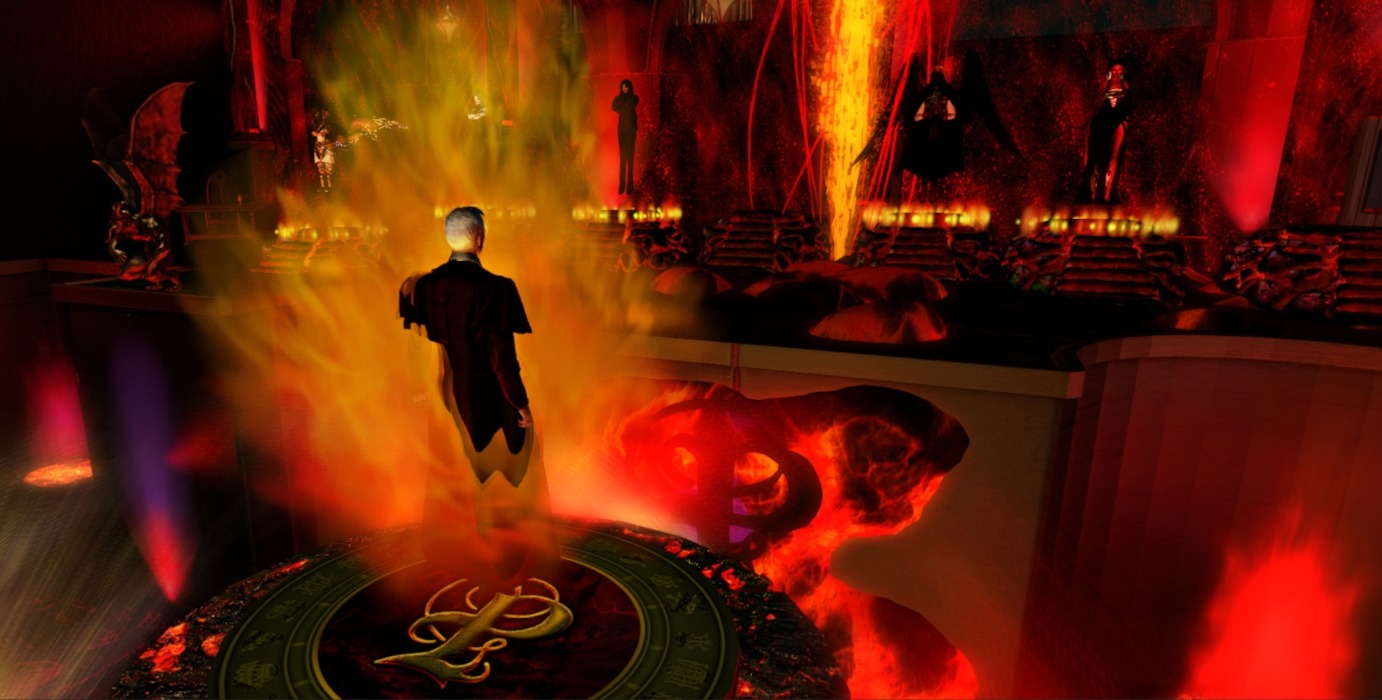
Diabolic Ascension photos taken by Ϯ Ṽɛɛƈƙẏ ŁʋŊĄ Ŧυяẏ Vυιѕѕєηт Ϯ (veecky.lane)
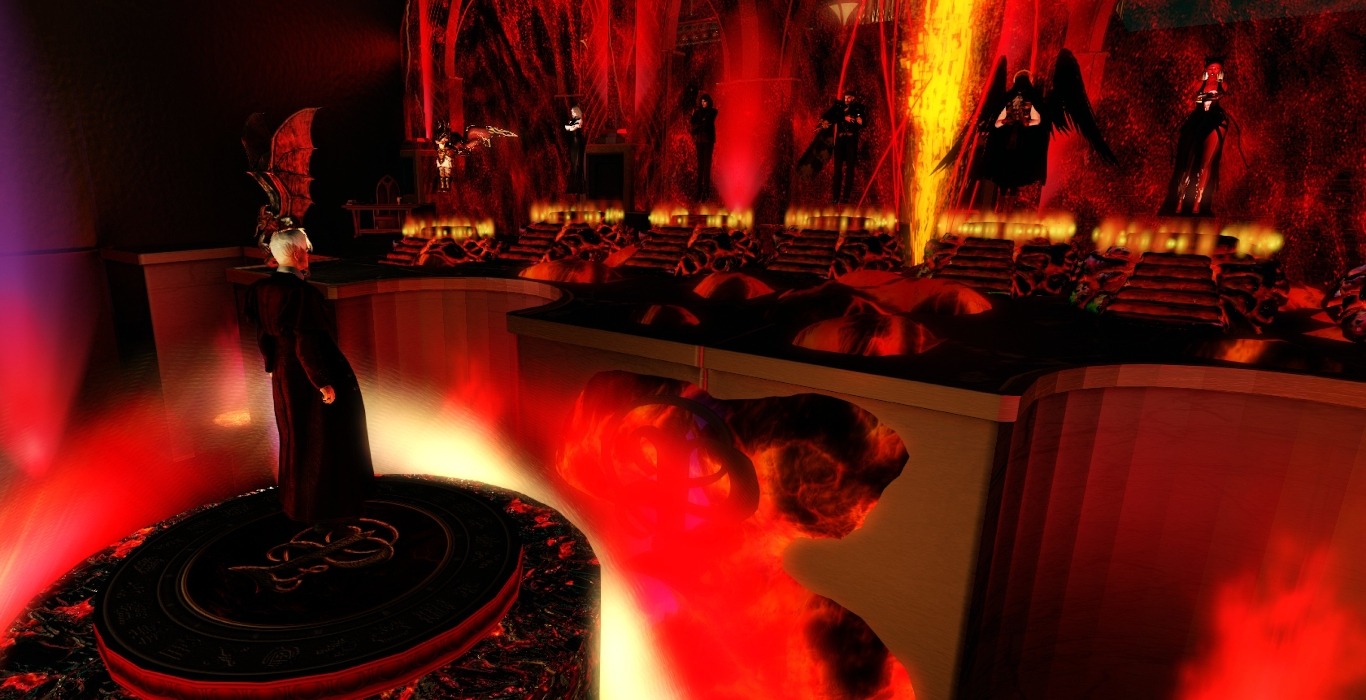
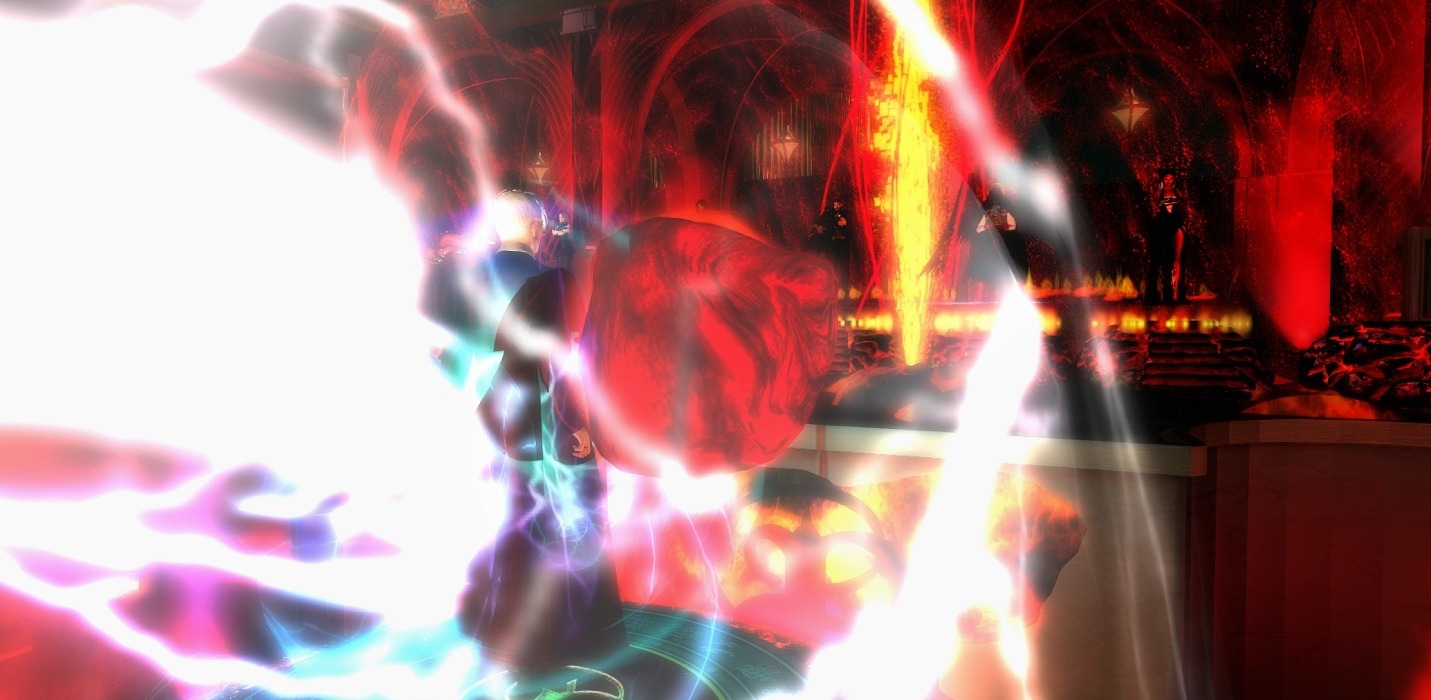
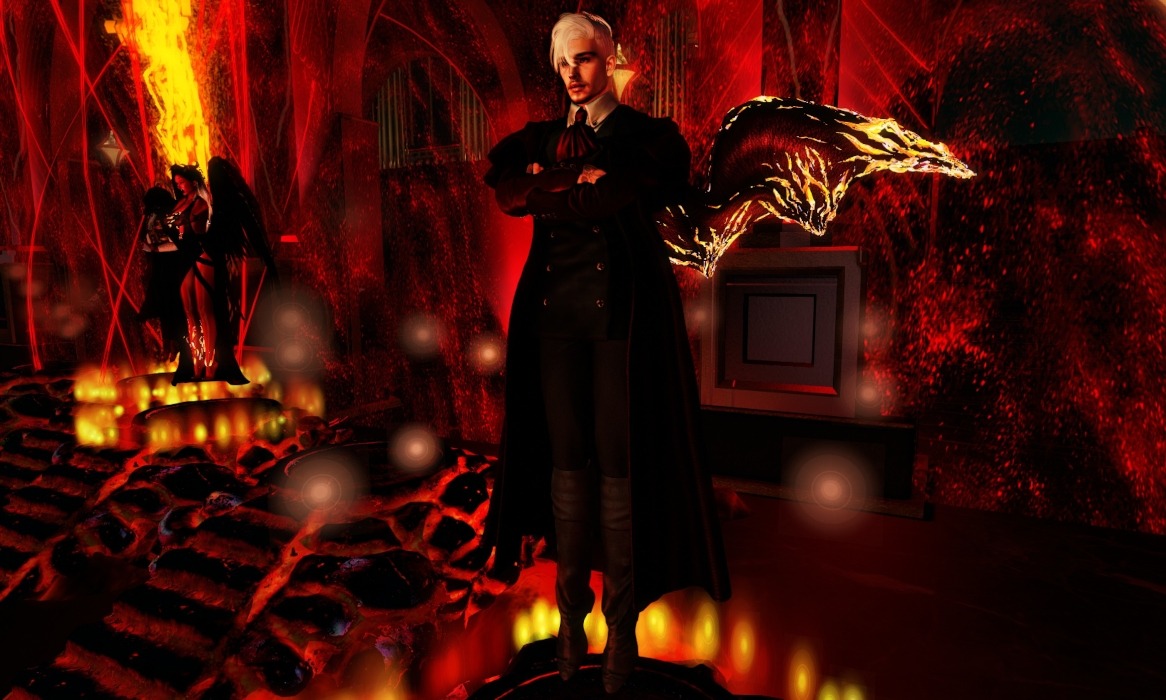
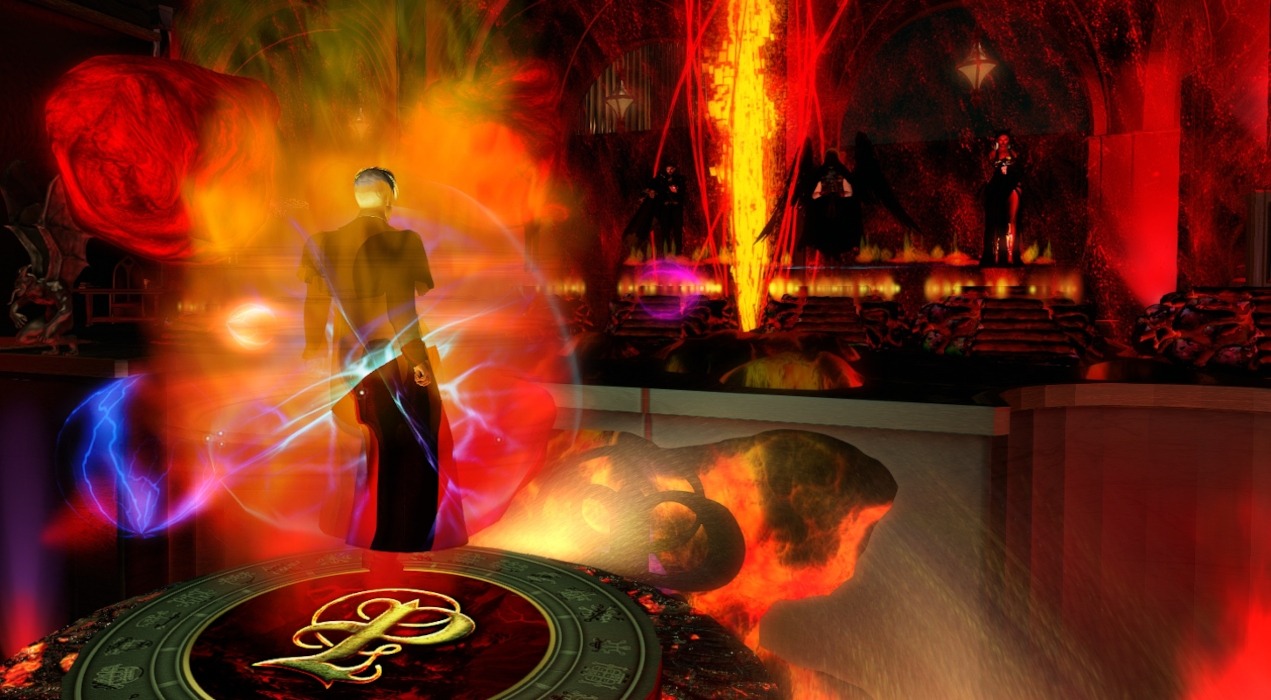
They always say you should never ask the questions you don’t truly want answers to.
But hunger makes fools of even the immortal.
Not mortal hunger — something older, colder, carved into the bone. A craving born from fear itself. We fear the answers, yet we cannot stop reaching for them. In Progeny, fear and hunger are siblings; one gnaws, the other whispers.
And in this chamber, with its suffocating walls and air heavy as old smoke, that hunger tightened inside me until I could no longer tell whether I was seeking truth or inviting ruin.
I lifted the quill. Ink trembled at the tip like a warning.
The next set of questions would strike fear into any immortal —
not because of what I asked,
But because of what Diabolic Xander might say in return.
I should not have been here.
I should not have asked.
But I asked anyway.
The chamber walls felt as though they were closing in. My stomach knotted with hunger — not for food, but for his words. Each answer felt like sustenance, each silence like famine. My hand ached from writing, ink blotting across the parchment, yet I pressed on.
I steadied the quill.
“How do you view leadership within Progeny now that you stand beyond mortality?”
His gaze was unwavering.
“Standing beyond mortality has not made leadership simpler. It has made it heavier… A Diabolic should never rule through fear alone. Fear creates obedience, but never loyalty… Leadership must be rooted in trust, consistency, and accountability… I do not stand above the community because I am beyond mortality. I stand beside it with a greater obligation—to carry its burdens, to preserve its legacy, and to ensure that when history judges my actions, it finds not a ruler seeking power, but a steward worthy of the trust placed in him.”
I felt the weight of his words. He was clearly passionate about the subject. Progeny was something I was certainly passionate about myself. I looked around the chambers once again. I started to feel at ease, more comfortable in the surroundings, even though I ought not to be. Diabolics are said to be devilish. You never know what one might do.
On that last thought, I dipped the quill again, ink staining my fingertips.
“How do you see the Diabolic position functioning in the current political landscape?”
His voice carried weight like stone.
“The position of Diabolic is not a throne. It is a responsibility. Too often, power is mistaken for authority over others. I see it differently. A Diabolic exists to safeguard the balance of the Realm, to preserve its principles, and to ensure that no single ambition overshadows the collective future of Progeny.”
The rain hammered harder, and I swallowed against the hollow ache in my chest.
A bead of sweat slid down my brow, dotting the parchment.
“What do you believe the community expects from you, and what do you expect from them?”
His eyes pierced me.
“I believe the community expects me to lead with clarity, fairness, and conviction… They expect consistency—not perfection—and the willingness to stand firm even when the path is unpopular… In return, I ask for honesty over rumor, participation over indifference, and respect even in disagreement… I do not expect blind loyalty. Loyalty without thought has little value. I expect accountability. Also, as a Diabolic, I will always serve our Source at First.”
My throat constricted as I asked:
“What changes or evolutions do you foresee for Progeny under your influence?”
“My influence is not meant to reshape the Realm in my own image. It is meant to strengthen the foundations upon which it stands. I envision a Progeny where loyalty is earned through action rather than titles, where knowledge is preserved rather than forgotten, and where every vampire understands that immortality is a privilege sustained by responsibility.”
The silence grew. The sound of the rain dying off just outside grew loud — one drip, two drip, silence. The rain had finally stopped.
I leaned forward, voice barely audible.
“What part of yourself do you show the world, and what do you keep hidden?”
He looked as if he was pondering this question long and hard. Being a Diabolic, I imagined, was a most difficult task. Emotions must be handled with care.
“It sees a Diabolic who never hesitates, whose words carry the weight of judgment and whose gaze betrays neither doubt nor fear. It sees discipline, control, and the quiet confidence of one who has already accepted the price of eternity.”
The smoke wove itself briefly into a face resembling mine before unraveling. I studied him for what felt like close to eternity. He was answering everything without hesitation. Nothing was getting past him during this interview.
The candle sputtered, its flame thinning into a trembling thread.
“What symbols or imagery define you now?”
His voice was steady, yet confident.
“I am defined by the language of flame and shadow. My sigil is the burning X—a mark that speaks of both my name and the crossing of thresholds. It is the point where the old self dies and the eternal self is forged. It is not merely a letter; it is a wound stitched closed with fire.”
I swore I saw the X glowing faintly in the candle flame as he spoke this. Perhaps he was playing tricks on me with the flame. Or my imagination was getting the best of me.
A drop of ink fell onto the parchment as I asked:
“What does the name Xander mean to you after your Apotheosis?”
“Xander is no longer my identity. It is my origin… The man called Xander died in the fire. The name endured… because eternity remembers where it began.”
A chill slid down my spine as his words settled in the chamber like ash. The man called Xander — gone, burned away, reduced to origin rather than identity. I felt the weight of that truth press against my ribs. It was one thing to speak of immortality, another to sit before someone who had stepped past even that.
For a moment, the candlelight dimmed low, as if the flame itself acknowledged him.
I swallowed, the quill trembling in my grip. I had asked the question, but now I wasn’t sure I wanted the next answer. There was a difference between interviewing an immortal and confronting something that had outgrown the very concept of death.
Eternity wasn’t a word to him.
It was a condition.
A state.
A verdict.
And clearly, the Source had chosen Diabolic Xander —
And one could see exactly why.
I forced my voice steady.
“How do you define eternity now that you have stepped beyond immortality?”
“Immortality is merely the absence of death. Eternity is the absence of an end… Death once stood as the final certainty. Immortality removed that certainty. Eternity removed the need to care about it at all.”
Sweat slid down my brow again. Was it hot in here, or was my mind playing tricks on me?
“If you could speak to the man you were before the flames, what would you tell him?”
His voice dropped to a whisper that seemed to crawl across the stone.
“I would tell him not to fear the flames. I would tell him he is wrong. The fire does not consume the worthy—it reveals them.”
A single raven rapped faintly at the window, then vanished into the night. As if HELL was bringing a message. Yet, I was on a mission.
My quill trembled in my grip, the ink trembling with it.
“What would you say to any vampire who seeks The Source?”
He looked at me with a sharp glance as if I should not have spoken the name.
“I would tell them that in the end, it is not the vampire who seeks the Source, but the Source that insinuates itself into you and guides you to it when it has chosen you. If you seek The Source, ask yourself one question before you take the first step: Are you willing to lose everything that makes you believe you deserve it? Do not seek The Source because you crave power. Power fades. You will fail quickly.”
Those words stung. They were powerful indeed. Good advice, I belted out.
My quill lay abandoned, ink bleeding into the parchment, as though it too had surrendered to the burden of what had been spoken.
I rose, the stone beneath my feet cold and unyielding. There was now a chill in the air that replaced that fiery heat. Hunger lingered in me — not mortal hunger, but the endless craving that defines our kind. His tales had filled me and emptied me all at once.
I bowed my head.
“Thank you… for your time, and for the tales you have shared.”
For the first time, his gaze shifted, and his voice softened — though it carried the same inevitability as iron.
“And I thank you… for listening. For carrying echoes into the night.”
I turned toward the door. Its iron hinges groaned as I pulled it open, the corridor stretching ahead like a throat of stone. My footsteps echoed, each one swallowed quickly by the walls.
Behind me, his voice trailed off, low and steady, following me into the dark:
“Thank you…” The door slammed shut.
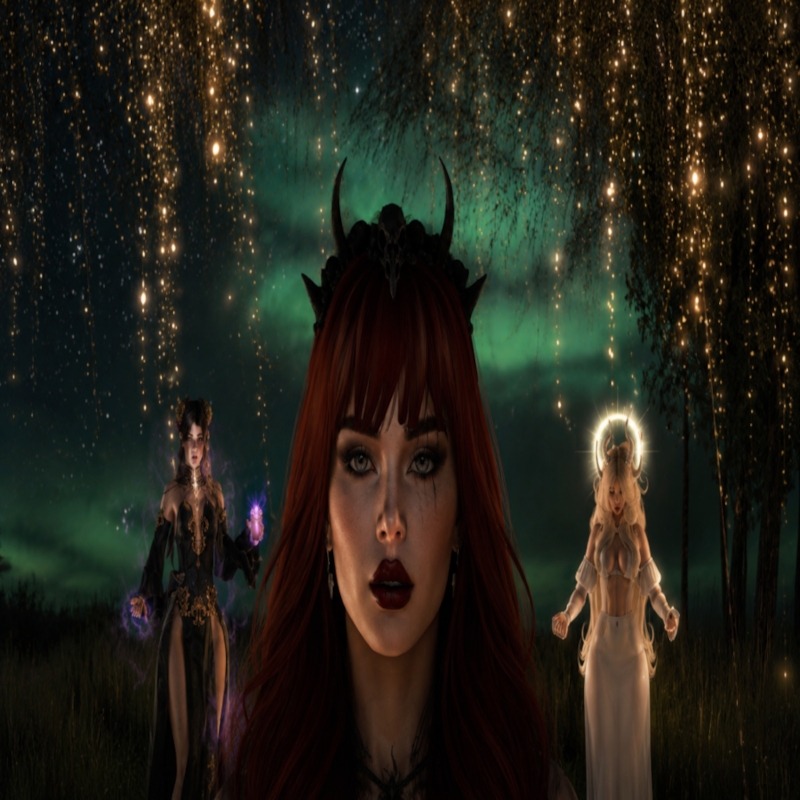
The Grove of Proteus introduces ceremony-driven roleplay, complementing PV’s rich traditions. While PV is deeply rooted in vampiric and demonic themes, the
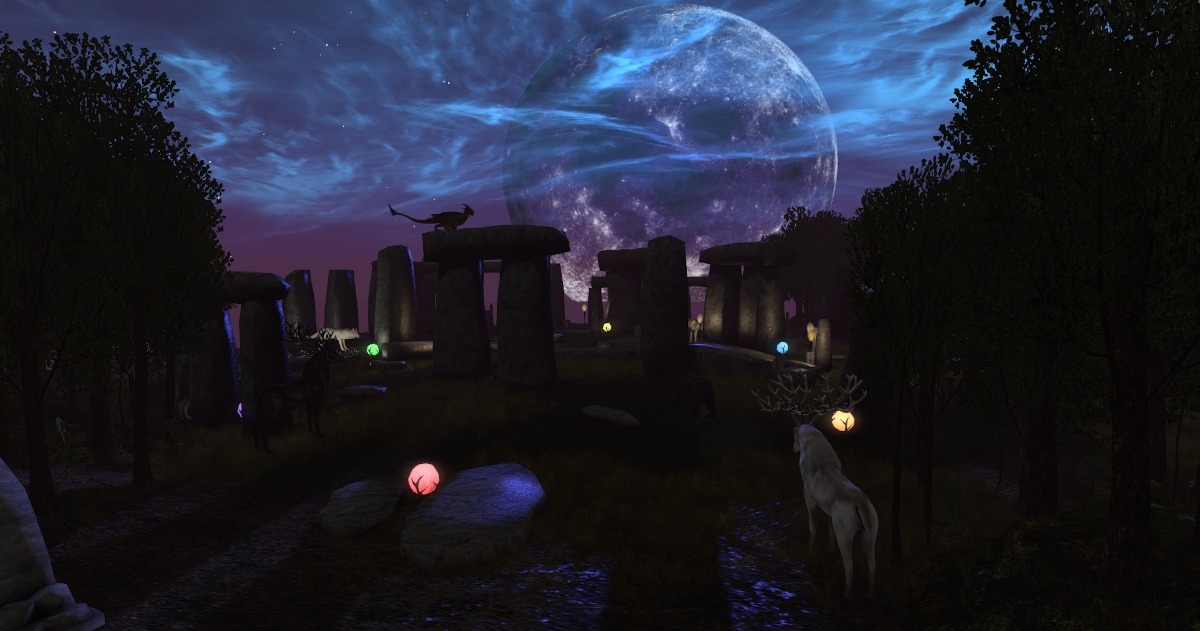
There are nights that pass quietly into memory, and then there are nights that leave footprints upon the soul. Our June Full Moon